

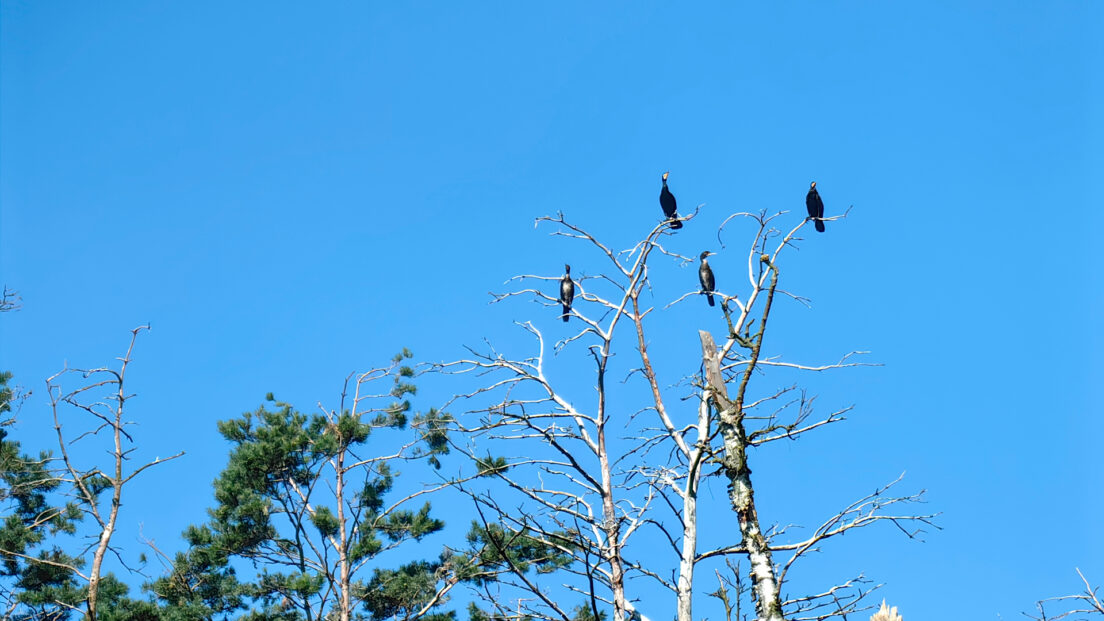
A summer hike through the cormorant reserve in Kąty Rybackie. We enter the reserve from the east and take the yellow trail to reach the cormorant nesting grounds. We exit the reserve from the west, visit the beautiful beach in Kąty Rybackie, and return to the reserve to take the blue...
Region: Vistula Spit
Vistula Spit – a physiogeographic mesoregion in northern Poland. It is a sandy ridge on the southeastern shore of the Bay of Gdańsk, stretching from Sopot in the west to Primorsk in the Russian Federation in the northeast. It separates the Vistula Lagoon and Żuławy Wiślane from the Bay of Gdańsk. The border between Poland and the Russian Federation runs through the spit approximately halfway along its length.
The Vistula Spit is approximately 115 km long, including approximately 78 km on the Polish side, and averages 1 to 3 km wide. It is a large sand dune, the height of which in some places exceeds 30 meters above sea level. The spit was formed by the action of sea waves and (to a lesser extent) wind. The highest dune, Camel’s Ridge (also known as Garb) (56 m above sea level), is located a few kilometers east of Krynica Morska. The highest peak of the Vistula Spit is the dune called Wielbłądzi Grzbiet (Camel’s Ridge), which is 49 meters above sea level.
The Vistula Spit has no waterway system except for the Vistula’s mouths: the Śmiała Wisła (created in 1840) and the Przekop Wisły (1891–1895). Furthermore, the Kashubian Canal was built on the spit’s western edge between 1901 and 1904. In Kąty Rybackie, the construction of a canal through the Vistula Spit, connecting the Vistula Lagoon with the Bay of Gdańsk, was completed in 2022.
The mesoregion has a typical coastal climate, with average annual temperatures slightly higher than in the lake districts but slightly lower than in central Poland. Spring is cooler than inland, but autumn is significantly warmer. The average annual and average daily temperature ranges are lower than inland. The Baltic Sea’s influence is also evident in the length of the seasons – winters are significantly shorter on the coast, and autumn is longer.
Vegetation typical of the coast has developed on the Vistula Spit. It occurs in distinctive bands. The primary beach vegetation is sandy honkenya and sea rockweed, which, among other things, inhibit dunes. Other halophytes associated with beach habitats, such as spiny saline, also occur.
Spacious grasses dominate the white dune. Typical grasses of the Polish coast include common sandwort and sand lyme. In addition to grasses, butterbur and sea pea are rare, as is arborvitae, which also grow beyond the coastal zone. On the grey dune, in addition to the plants found on the white dune, there are numerous green algae, cyanobacteria, sand sedge, gray brush, and sand helichrysum.
The dominant vegetation on the spit is pine forest. The Scots pine growing here thrives in difficult conditions. Due to wind pressure, the pines growing on the dunes are severely deformed, often stunted, and their crowns and trunks are asymmetrical. In addition to the pine, common juniper and sand willow grow in the pine forests. The pine forest undergrowth includes common heather, black crowberry, and lingonberry.
To protect nature on the Vistula Spit, the “Vistula Spit” Landscape Park and four reserves were established: Buki Mierzeji Wiślanej (Vistula Spit Beeches) in Krynica Morska, Kąty Rybackie, Mewia Łacha in Mikoszewo and Gdańsk, and Ptasi Raj (Bird’s Paradise) in Gdańsk.
Hikes in the Vistula Spit:
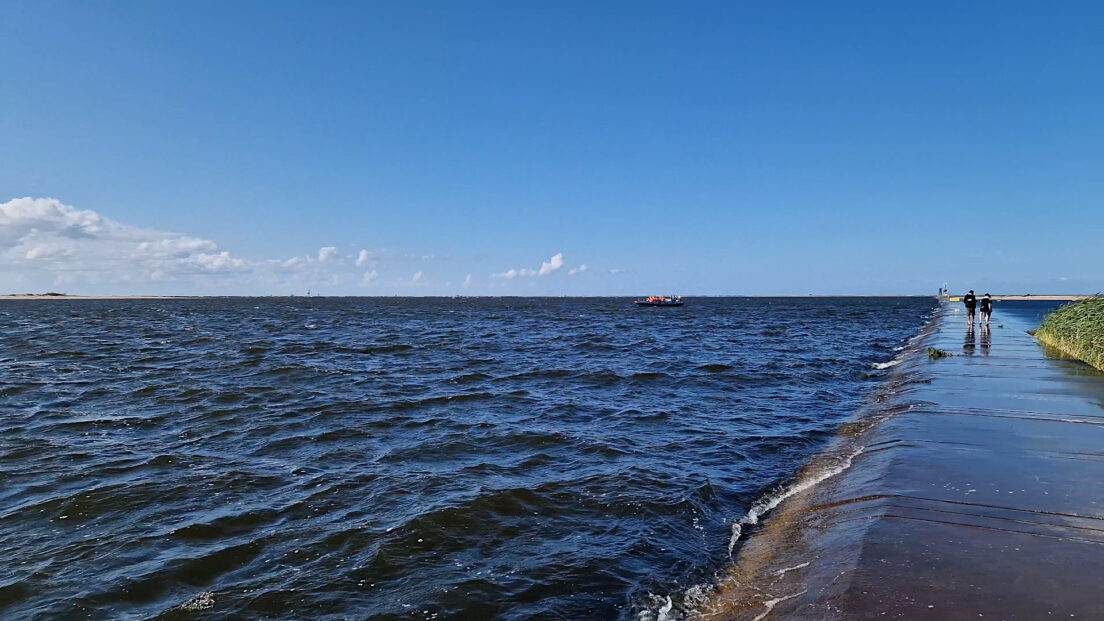
A summer hike to the Vistula Mouth. From Mikoszewo, we walk along the right bank of the Vistula River through the Mewia Łacha Nature Reserve to its mouth. At the very end of the river, there's a sandbank, home to many bird species. Seals also regularly visit. Then, along the seashore, we...